
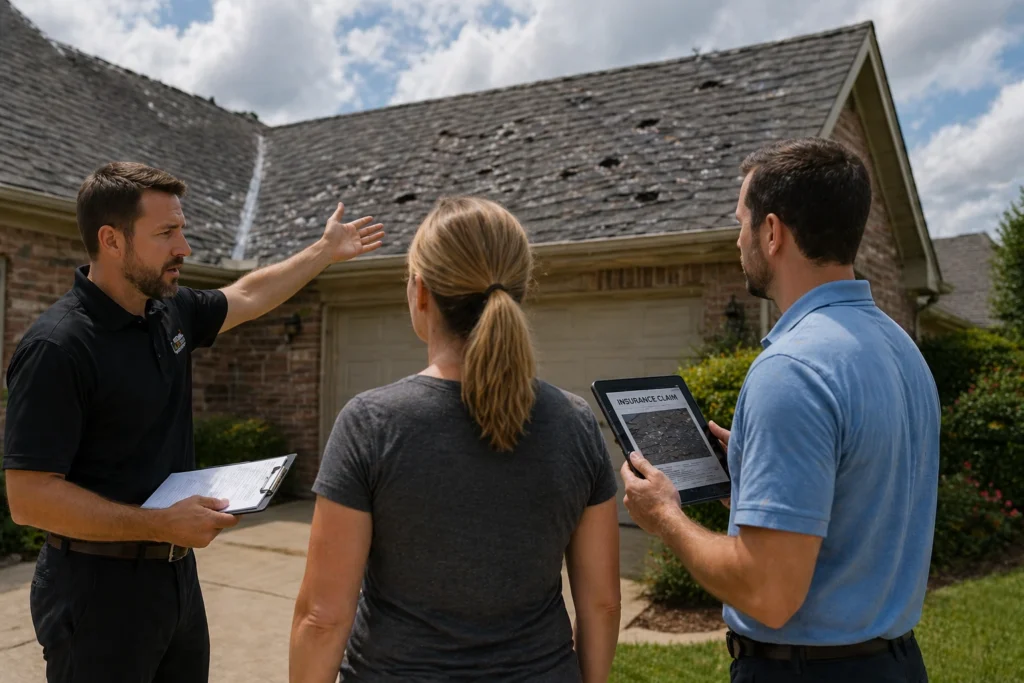
A roof hail damage insurance claim Texas homeowners file after a storm can either protect their investment or quietly drain their wallet over time. There’s rarely a middle ground. The difference comes down to what you know, how quickly you act, and whether you understand how the claim process actually works.
Hailstorms are part of life in Texas. In East Texas, they hit fast and leave even faster but the damage they leave behind sticks around. In Tyler, it’s not uncommon for a single storm to impact entire neighborhoods within minutes. Roofs take the brunt of that impact. And unfortunately, not every hail damage on roof insurance claim gets handled properly. This guide is built to change that. It’s detailed. It’s practical. And it’s designed to help you make the right decisions from the moment the storm hits to the final settlement check.
Understanding Hail Damage on Your Roof
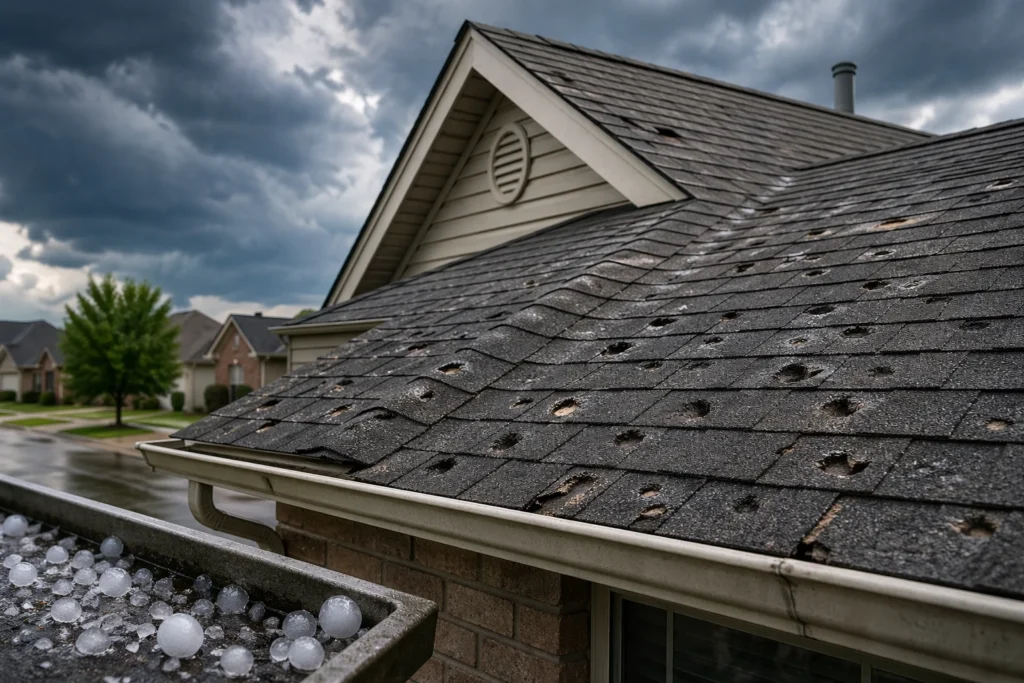
Hail damage isn’t always dramatic. Sometimes it’s obvious shingles missing, gutters dented, leaks forming. Other times, it’s subtle. Hidden. Easy to miss. At its core, hail damage happens when ice impacts your roof with enough force to weaken its protective surface. That damage can compromise your roof immediately or slowly degrade it over time.
Cosmetic vs Functional Damage
Insurance companies often divide hail damage into two categories:
- Cosmetic Damage
Surface-level dents or marks that don’t immediately affect performance - Functional Damage
Damage that reduces your roof’s ability to protect your home
Here’s the reality: what an insurer calls “cosmetic” can still shorten the lifespan of your roof. That distinction matters when filing a hail roof damage insurance claim.
How to Identify Hail Damage by Roof Type
Different roofing materials respond differently to hail. Understanding those differences is critical when building a strong roof hail damage insurance claim Texas homeowners can rely on.
Asphalt Shingles
This is the most common roofing material in Texas and the one most frequently involved in claims.
Signs of Damage:
- Soft, dark bruising on shingles
- Granule loss exposing asphalt
- Circular impact marks
- Cracks or splits
Granules are your roof’s armor. Once they’re gone, UV rays accelerate deterioration. That means what looks minor today can turn into a major repair later.
Metal Roofing
Metal roofs are durable. But they’re not immune.
What to Look For:
- Visible dents across panels
- Deformation near seams
- Coating damage exposing raw metal
Some insurance companies may classify dents as cosmetic. But dents can disrupt water flow and lead to long-term performance issues.
Tile and Slate Roofs
These materials are strong but brittle.
Common Damage:
- Cracked tiles
- Broken edges
- Dislodged sections
Even a single cracked tile can allow water to seep in. Over time, that leads to underlayment damage and costly repairs.
Why You Should Never Ignore Hail Damage
It’s tempting to wait. Especially if you don’t see leaks right away. That’s a mistake.
Here’s what happens when hail damage is ignored:
- Minor damage spreads
- Water begins to penetrate
- Mold starts to grow
- Structural damage develops
And then there’s the insurance side. Most policies have time limits. Wait too long, and your hail damage on roof insurance claim may be denied outright. In Tyler, where storms can hit multiple times per season, delaying action often leads to compounded damage and complicated claims.
Immediate Steps After a Hailstorm
The minutes and hours after a storm matter. What you do next sets the tone for your entire claim.
Step 1: Stay Safe
Never climb onto your roof immediately after a storm.
Step 2: Inspect from the Ground
Look for:
- Shingle debris
- Dented gutters
- Damaged siding
Step 3: Document Everything
Take photos. Record videos. Capture as much detail as possible.
Step 4: Schedule a Professional Inspection
Local experts in Tyler understand regional storm patterns and insurance expectations. That knowledge is valuable.
Documenting Hail Damage the Right Way

Documentation isn’t just helpful it’s essential. A well-documented roof hail damage insurance claim Texas homeowners submit is far more likely to succeed. This step is where many claims are either strengthened or weakened before the adjuster even arrives.
When homeowners ask about how to document hail damage for an insurance claim, the biggest mistake I see is rushing through it. Slow down. Take clear, detailed photos and organize everything so your insurer can easily follow the timeline and severity of damage.
Photo Documentation Checklist
- Full roof overview
- Close-up damage shots
- Gutters and downspouts
- Vents, flashing, and skylights
- Interior ceiling stains or leaks
Written Records
Keep notes on:
- Date and time of the storm
- When damage was first noticed
- Any previous repairs
Supporting Documents
- Roof maintenance history
- Inspection reports
- Contractor estimates
The goal is simple: eliminate doubt. The more evidence you provide, the stronger your claim becomes.
The Roof Hail Damage Insurance Claim Texas Process
Understanding the process gives you an advantage. Most homeowners don’t fully grasp it—and that’s where mistakes happen.
Step-by-Step Overview
| Step | Description | Risk |
| File Claim | Contact insurer promptly | Delay can hurt claim |
| Inspection | Adjuster evaluates damage | Incomplete scope |
| Estimate | Carrier issues repair estimate | Underpricing common |
| Decision | Claim approved or denied | Partial payouts frequent |
Each step matters. Missing details early can cost you later.
What Insurance Companies Commonly Miss
Here’s the truth: insurance adjusters are often under pressure to move quickly.
That leads to missed items.
Commonly Overlooked Issues
- Subtle shingle bruising
- Underlayment damage
- Flashing and vent repairs
- Code upgrade requirements
- Drip edge and starter strips
After large storms in Tyler, adjusters may handle dozens of claims weekly. That volume increases the chances of oversight. And those oversights? They cost you money.
Supplements: Closing the Gap in Your Claim
Let’s say your claim is approved but the payout feels low. That’s where supplements come in. A supplement is an additional request for funds based on overlooked or newly discovered damage. This is exactly where hail damage claim supplements: what carriers miss in their scope becomes critical. Many initial estimates leave out essential repairs, and without supplements, those costs fall on you.
Common Supplement Additions
- Additional shingles
- Decking replacement
- Vent and flashing repairs
- Labor cost adjustments
Supplements aren’t automatic. They require documentation, precision, and negotiation.
Why Claims Get Denied
Denials are frustrating. But they’re often predictable.
Common Reasons:
- Insufficient documentation
- Filing too late
- Pre-existing damage disputes
- “No storm-related damage found”
A poorly prepared hail roof damage insurance claim leaves room for insurers to push back.
Handling a Denied Claim the Right Way
A denial isn’t the end. It’s a turning point.
If you’re unsure what to do if your hail claim was denied in Texas, the first step is not to accept the decision immediately. Many denials happen due to incomplete inspections or weak documentation and both can be corrected.
What You Can Do:
- Request a reinspection
- Submit additional documentation
- Bring in a professional evaluation
- Hire a public adjuster
Persistence matters. Strategy matters more.
Adjusters: Who’s Really Representing You?
This is where outcomes change.
Understanding public adjuster vs. insurance adjuster for hail claims in Texas can completely shift your results. One works to protect the insurer’s bottom line, while the other works to protect yours.
| Type | Works For | Objective |
| Insurance Adjuster | Insurance company | Control costs |
| Public Adjuster | Homeowner | Maximize payout |
That distinction matters more than most homeowners realize.
Why a Public Adjuster Changes the Outcome
A public adjuster isn’t just helpful they’re strategic.
What They Do:
- Conduct detailed inspections
- Identify hidden damage
- Build a comprehensive claim
- Negotiate directly with insurers
- Handle supplement requests
They don’t guess. They document.
In storm-heavy areas like Tyler, that expertise can mean the difference between partial coverage and a full roof replacement.
Understanding Your Insurance Policy (What Most Homeowners Miss)
Here’s something most homeowners overlook until it’s too late the fine print. Your policy isn’t just a formality. It dictates exactly how your roof hail damage insurance claim Texas will be handled, paid, or denied.
Key Terms You Need to Know
- Deductible
This is what you pay out of pocket before coverage kicks in - Actual Cash Value (ACV)
This factors in depreciation - Replacement Cost Value (RCV)
Covers full replacement costs - Exclusions
Some policies limit cosmetic damage coverage
If you don’t understand your policy, you’re already at a disadvantage.
The Role of Contractors in Your Claim
Contractors can help or hurt your claim.
A qualified roofing contractor:
- Identifies damage accurately
- Provides detailed estimates
- Supports supplement requests
But not all contractors understand the insurance side of things.
What to Look For:
- Experience with insurance claims
- Detailed reporting
- Clear communication
In Tyler, experienced contractors often work alongside public adjusters to strengthen claims.
Timing Matters More Than You Think
Filing quickly isn’t optional it’s strategic.
Why Timing Impacts Your Claim:
- Fresh damage is easier to verify
- Weather data supports your case
- Delays create doubt
A prompt roof hail damage insurance claim Texas helps eliminate unnecessary disputes.
What Happens During the Adjuster Inspection
This is one of the most important steps in your claim.
The adjuster will:
- Inspect your roof
- Document visible damage
- Create an initial estimate
Where Issues Happen:
- Limited inspection time
- Missed subtle damage
- Incomplete scope
Having a professional present during this stage can make a significant difference.
Red Flags to Watch During Your Claim
Not all claims go smoothly.
Watch for:
- Low initial estimates
- Dismissed damage
- Slow communication
- Inconsistent reports
These are signs your claim may need closer attention.
The Financial Impact of a Poor Claim
Let’s keep it real.
A weak claim can cost you thousands.
| Scenario | Outcome |
| Strong documentation | Full replacement |
| Weak documentation | Partial repair |
| Delayed claim | Denial |
That gap is real and avoidable.
Preventing Future Hail Damage
You can’t stop hail. But you can prepare.
Smart Upgrades:
- Impact-resistant shingles
- Metal roofing systems
- Reinforced underlayment
Routine Maintenance:
- Annual inspections
- Clean gutters
- Policy reviews
Preparation today reduces problems tomorrow.
Final Thoughts
A roof hail damage insurance claim Texas homeowners deal with isn’t just paperwork it’s a process that determines whether your home is fully restored or partially patched. Handled correctly, it protects your investment. Handled poorly, it leaves you exposed.
If you’re in Tyler, the risk is real. But so is your ability to respond the right way. Act fast. Document everything. And don’t leave money on the table.
FAQs
It’s a request submitted to your insurance company to cover repairs or replacement costs caused by hail damage to your roof.
Look for dents, cracked shingles, granule loss, or leaks, but a professional inspection is the most accurate way to confirm damage.
You should file as soon as possible after the storm to avoid disputes or denial due to delayed reporting.
Most policies cover functional damage, but cosmetic damage may be limited depending on your policy terms.
You’ll need photos, inspection reports, repair estimates, and records showing when the damage occurred.
You can request a reinspection, provide additional evidence, or hire a public adjuster to challenge the decision.
Yes, hail damage can exist without visible leaks and still qualify for a valid insurance claim.
Most claims take a few weeks to process, but delays can occur if there are disputes or supplements involved.
A supplement is a request for additional funds when the initial estimate misses necessary repairs or materials.
If your claim is complex, underpaid, or denied, a public adjuster can help maximize your settlement and handle negotiations.