
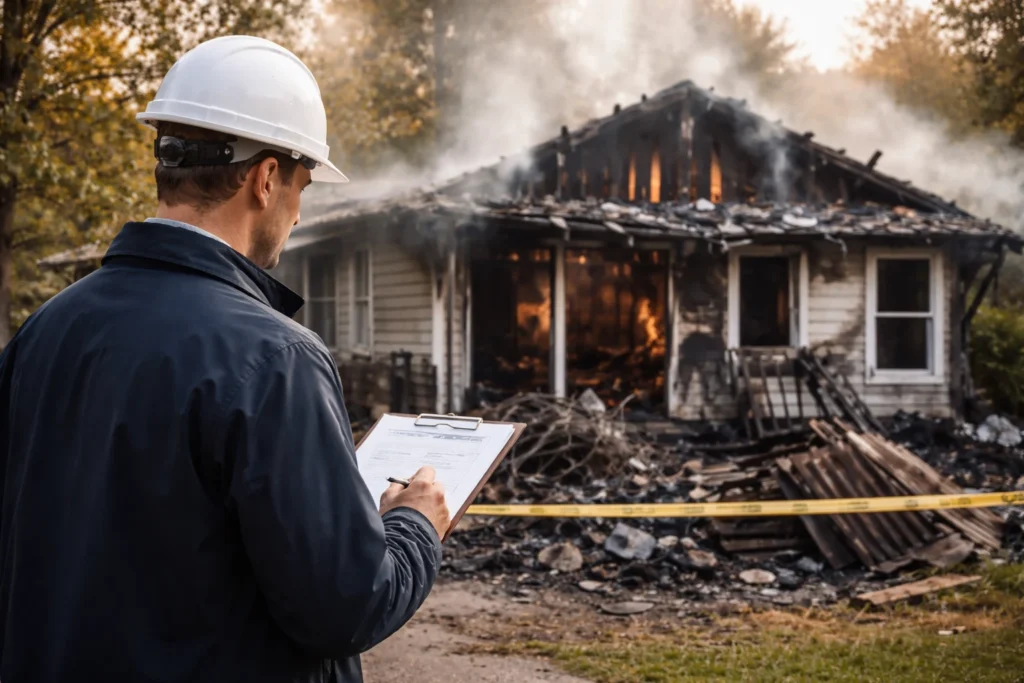
A fire can turn a normal day into chaos in minutes. One moment everything is intact. The next, you are standing outside your property watching smoke pour from the roof and wondering how life just changed so quickly. After the firefighters leave and the smoke clears, another challenge begins — the insurance claim.
This is where fire insurance public adjusters step in.
Filing a fire claim may sound straightforward. In reality, it rarely is. Policies are complex. Damage is often hidden. And insurance companies conduct detailed investigations before approving settlements. Many homeowners quickly realize they are negotiating against professionals who deal with claims every day.
That imbalance matters.
Fire insurance public adjusters exist to restore balance. They represent the policyholder, not the insurance company. Their job is simple in theory but powerful in practice: document the full extent of damage, interpret the insurance policy correctly, and negotiate for the maximum settlement allowed under the coverage.
Let’s walk through how this works, why fire claims are so complex, and how these professionals help property owners recover faster and more fairly.
What Are Fire Insurance Public Adjusters?
Most people have never heard of a public adjuster until they actually need one.
A public adjuster is a licensed professional who works on behalf of the policyholder during an insurance claim. Unlike insurance company adjusters, who are hired by the insurer, public adjusters represent the property owner.
When we talk specifically about fire insurance public adjusters, we are referring to specialists who focus on fire damage claims. Fire losses involve unique issues: smoke contamination, structural instability, water damage from firefighting, and extensive personal property losses.
These professionals handle claims every day. They understand how insurers calculate losses. More importantly, they know how to challenge incomplete or undervalued estimates.
Their role usually includes:
- Inspecting fire damage thoroughly
- Reviewing the insurance policy line by line
- Preparing claim documentation
- Estimating repair costs
- Creating detailed personal property inventories
- Negotiating directly with the insurance company
In short, they become the policyholder’s advocate.
How Fire Insurance Claims Typically Work
At first glance, the claims process appears simple. File the claim. Wait for inspection. Receive payment.
But that surface-level view hides a lot of complexity.
Here is how a typical fire claim unfolds.
Step 1: Reporting the Loss
The property owner contacts the insurance company and reports the fire damage. The insurer then assigns an adjuster to investigate.
Step 2: Emergency Stabilization
Before repairs begin, the property may require emergency services such as:
- Board-up of damaged windows
- Roof tarping
- Water extraction
- Smoke mitigation
These steps prevent additional damage while the claim moves forward.
Step 3: Insurance Inspection
The insurer sends their adjuster to inspect the property. They evaluate structural damage, smoke impact, and repair needs.
Step 4: Documentation and Estimates
The claim now enters the documentation phase. This is where the process becomes detailed and time-consuming.
Damage must be documented with:
- Photos
- Measurements
- Repair estimates
- Inventory lists of lost belongings
Step 5: Settlement Negotiation
The insurance company reviews all submitted information and calculates the payout.
Sometimes the initial offer is fair. Other times it is incomplete or undervalued. That is where fire insurance public adjusters can make a significant difference.
Why Fire Claims Are Often More Complicated Than Expected
Fire damage rarely stops at what you can see.
A burned wall is obvious. Smoke damage inside insulation, wiring, HVAC systems, and ductwork is not. Yet those issues can affect air quality and long-term safety.
Fire claims often include several types of damage at once:
- Structural damage
- Smoke and soot contamination
- Water damage from firefighting
- Electrical system damage
- HVAC contamination
- Personal property loss
Many homeowners underestimate the scope of these problems.
Insurance companies rely heavily on documentation. If damage is not properly recorded, it may not be included in the settlement.
This is one of the reasons fire insurance public adjusters exist. Their job is to capture the full picture of loss, not just the obvious damage.
What Fire Insurance Public Adjusters Actually Do
The work of fire insurance public adjusters goes far beyond filling out paperwork. Their involvement touches nearly every stage of the claim.
Damage Assessment
The first step is a detailed inspection of the property.
This inspection may include:
- Structural evaluation
- Smoke damage analysis
- Water damage review
- Inspection of electrical and HVAC systems
Many adjusters also work with restoration contractors or engineers to ensure nothing is overlooked.
Claim Documentation
Insurance claims are built on documentation.
Public adjusters compile a comprehensive claim package that may include:
- Detailed repair estimates
- Photographic evidence
- Replacement cost reports
- Personal property inventories
- Contractor quotes
This documentation becomes the foundation of the negotiation process.
Policy Review
Insurance policies are legal documents filled with coverage terms, exclusions, and limits.
Fire insurance public adjusters carefully review the policy to identify all possible coverage areas. Sometimes this reveals benefits the homeowner didn’t even realize existed.
Negotiation
Negotiation is one of the most important parts of the process.
Insurance companies review claims carefully to control payouts. Public adjusters push back when estimates are incomplete or undervalued.
Their goal is simple: secure the most accurate settlement based on the policy.
Benefits of Hiring Fire Insurance Public Adjusters
Many homeowners initially try to manage their claims alone. Some succeed. Others quickly realize the process is overwhelming.
Hiring fire insurance public adjusters can provide several advantages.
Key benefits include:
- Professional claim preparation
- Accurate damage documentation
- Expert negotiation
- Reduced stress during recovery
- Faster claim resolution
A fire already creates enough disruption. Having an experienced professional handle the insurance process allows homeowners to focus on rebuilding their lives.
When Hiring a Public Adjuster Makes Sense
Not every fire claim requires outside assistance. Minor damage claims may be straightforward.
However, there are situations where fire insurance public adjusters can be especially valuable.
Large Fire Losses
Major structural damage often involves complex estimates and policy interpretation.
Commercial Property Fires
Business losses add another layer of complexity, including business interruption coverage.
Disputed Claims
If an insurer questions the extent of damage or denies parts of the claim, professional representation can help resolve the dispute.
Underpaid Settlements
Some homeowners receive initial offers that fall short of repair costs. A public adjuster can challenge those estimates.
Public Adjusters vs Insurance Company Adjusters
This distinction is critical.
Many property owners assume the insurance adjuster inspecting their property works for them. In reality, that adjuster represents the insurance company.
Here is the difference.
| Feature | Public Adjuster | Insurance Company Adjuster |
| Who they represent | Policyholder | Insurance company |
| Primary goal | Maximize claim payout | Protect insurer’s interests |
| Payment | Percentage of settlement | Paid by insurer |
| Role | Advocate for homeowner | Claim investigator |
This difference explains why fire insurance public adjusters can be so valuable during negotiations.
The Fire Claim Process With a Public Adjuster
When a homeowner hires a public adjuster, the claim process becomes more structured.
Initial Consultation
The adjuster evaluates the damage and explains how the claim process will work.
Property Inspection
A full inspection identifies structural, smoke, and water damage.
Claim Preparation
The adjuster compiles documentation and prepares repair estimates.
Policy Analysis
Coverage terms are reviewed carefully to ensure the claim includes all eligible losses.
Claim Submission
The completed claim package is submitted to the insurance company.
Negotiation
The adjuster negotiates with the insurer to reach a fair settlement.
Final Settlement
Once both sides agree, the claim payment is finalized.
Throughout this process, fire insurance public adjusters act as the policyholder’s advocate.
How Fire Damage Is Valued
One of the most challenging parts of a fire claim is calculating the true cost of damage.
Insurance settlements often rely on two key valuation methods.
| Valuation Type | Description |
| Replacement Cost | Cost to rebuild or replace damaged items with new materials |
| Actual Cash Value | Replacement cost minus depreciation |
Smoke damage can also affect property that appears untouched. Furniture, clothing, electronics, and appliances may require professional cleaning or replacement.
Public adjusters ensure these losses are properly included in the claim.
Choosing the Right Fire Insurance Public Adjuster
Not all adjusters have the same experience.
When selecting fire insurance public adjusters, homeowners should consider several factors.
Look for:
- State licensing
- Experience with fire claims
- Positive client reviews
- Clear communication
- Transparent fee agreements
A reputable adjuster should also be willing to explain the claim process in detail before any contract is signed.
How Public Adjusters Are Paid
Most fire insurance public adjusters work on a contingency basis.
This means they receive a percentage of the final settlement. If the claim does not result in additional recovery, they typically do not collect a fee.
This structure aligns their interests with the policyholder.
Their success depends on securing a fair claim payout.
Common Myths About Fire Insurance Public Adjusters
Several misconceptions surround this profession.
Myth 1: Only denied claims need public adjusters
In reality, many adjusters help manage claims from the very beginning.
Myth 2: Insurance companies always offer fair settlements
Insurance companies aim to control claim costs. Independent representation helps balance negotiations.
Myth 3: Public adjusters slow down claims
In many cases, professional documentation actually speeds up the process.
Myth 4: Only commercial properties need them
Residential homeowners also benefit from expert claim assistance.
Final Thoughts
Recovering from a fire is never easy. The emotional impact is real. The financial stress can be overwhelming.
But the insurance claim process does not have to become another burden.
Fire insurance public adjusters exist to help property owners navigate one of the most complicated insurance claims there is. They inspect the damage carefully. They document losses thoroughly. And they negotiate with insurers to secure fair compensation.
For many homeowners, that support makes a difficult situation far more manageable.
When fire damage occurs, having the right advocate on your side can make all the difference.